The Lynx
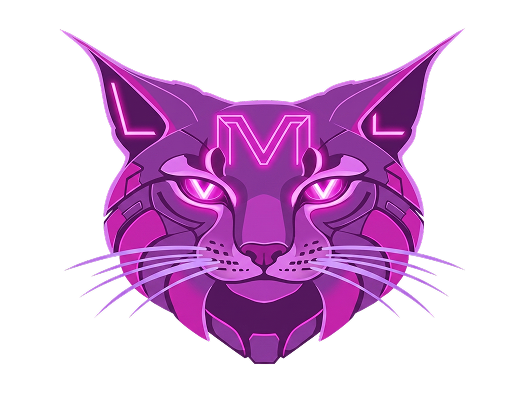
The MVL mascot is a lynx — a solitary, sharp-eyed predator that sees what others miss. It's not an accident.
Why a lynx?
A compiler that verifies everything needs a symbol that sees everything. The lynx is that symbol.
Lynx have the sharpest eyesight of any cat. In medieval European folklore, the lynx was said to see through walls and into the earth. The phrase lynx-eyed entered scientific culture through the Accademia dei Lincei ("Academy of the Lynx-Eyed"), founded in Rome in 1603 — one of the world's first scientific societies, whose members included Galileo. Their motto: see sharply, verify deeply.
That maps directly to what MVL does:
| Lynx trait | MVL parallel |
|---|---|
| Sees through darkness | Finds bugs invisible to testing |
| Solitary, self-reliant | No runtime, no garbage collector, no hidden dependencies |
| Patient and precise | 11 verification passes before emitting code |
| Quiet until it strikes | Zero overhead at runtime — all work happens at compile time |
The forehead V on the logo is both the lynx's natural fur pattern and a nod to verification.
The four lynx species
There are four living species in the genus Lynx. All share the signature ear tufts, short tail, and powerful build — but their stories are remarkably different.
Eurasian lynx (Lynx lynx)
The largest of the four species, standing up to 70 cm at the shoulder and weighing up to 30 kg. The Eurasian lynx ranges across an enormous territory — from Western Europe through Siberia to Central Asia.
- Population: ~45,000 worldwide; 17,000-18,000 in Europe
- Range: Scandinavia, Carpathians, Balkans, Alps, Russia, Central Asia
- Status: IUCN Near Threatened
- Threats: Habitat fragmentation, poaching, prey depletion
The Balkan subpopulation is critically endangered with only 20-39 mature individuals remaining. But overall, the species has bounced back significantly since its mid-20th century low point through reintroduction programs in Switzerland, Austria, Slovenia, and Poland.
Iberian lynx (Lynx pardinus)
The world's most endangered cat — and its greatest conservation comeback story.
- Population: 2,401 (2024 census) — up from just 94 individuals in 2002
- Range: Spain and Portugal
- Status: IUCN Vulnerable (upgraded from Endangered)
- Breeding: 470 breeding females, 844 cubs born in 2024
In 2002, the Iberian lynx was on the edge of extinction — the most endangered cat species on Earth. Two decades of intensive conservation, captive breeding, and habitat restoration brought the population from 94 to over 2,400. The species expanded into 17 breeding territories across Spain and Portugal, including new areas in Murcia and Castilla y Leon.
The LIFE LynxConnect program, which coordinates cross-border conservation, concludes in 2026.
Canada lynx (Lynx canadensis)
A boreal forest specialist with massive snowshoe-like paws, built for deep snow.
- Population: Stable across range; density varies 2-45 per 100 km² depending on prey cycle
- Range: Alaska, Canada, and northern contiguous US (Montana, Washington, Idaho, Minnesota, Maine, New Hampshire)
- Status: IUCN Least Concern
- Prey cycle: Population follows the 8-11 year boom-bust cycle of the snowshoe hare
The Canada lynx is intimately linked to the snowshoe hare — one of ecology's most famous predator-prey oscillations. When hare populations crash, lynx numbers follow within 1-2 years.
Bobcat (Lynx rufus)
The most adaptable lynx, thriving from deserts to swamps to suburban edges.
- Population: 700,000-1,500,000+ in the US alone
- Range: Southern Canada through the continental US to northern Mexico
- Status: IUCN Least Concern
- Density: 11-48 per 100 km² depending on habitat
Unlike its relatives, the bobcat doesn't depend on deep forest. It occupies the widest range of habitats of any lynx species — deciduous woodland, coniferous forest, swampland, desert, and agricultural edges. Thirteen recognized subspecies reflect this adaptability.
Conservation
The lynx genus tells two stories at once: resilience and fragility.
The Iberian lynx proves that determined conservation can pull a species back from the brink of extinction — 94 to 2,400 in two decades. The Balkan Eurasian lynx subpopulation (20-39 individuals) shows how quickly that can go the other way. The bobcat demonstrates what a species can achieve when habitat pressure is manageable.
MVL's bet is similar: that the right structural guarantees — applied consistently and verified exhaustively — can prevent the kind of slow erosion that turns small vulnerabilities into catastrophic failures. The lynx watches. The compiler proves.
Data sourced from IUCN Red List, Rewilding Europe, WWF, ISEC Canada, and Britannica.